

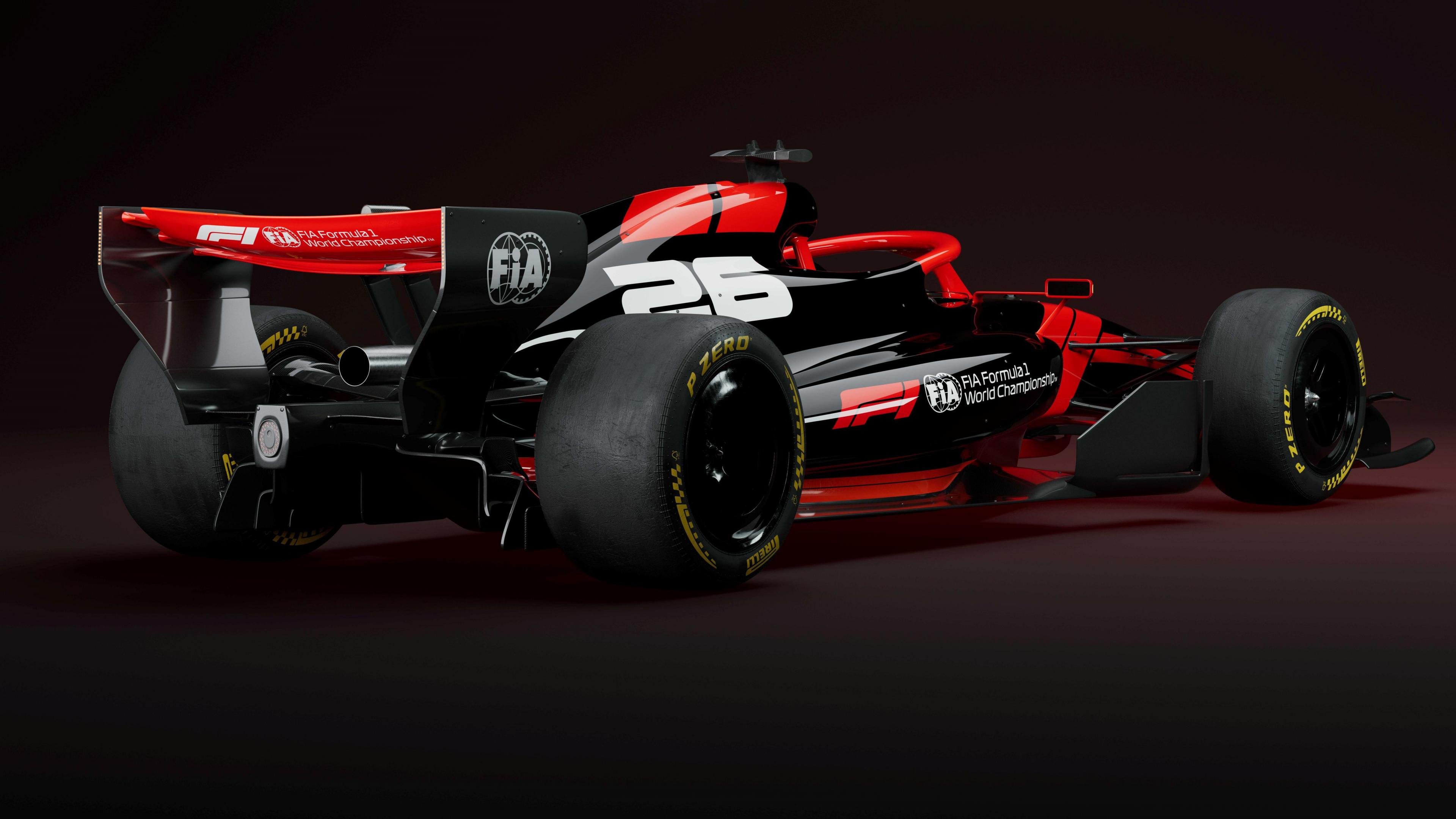
The 2026 cars are set to be lighter, more agile and sustainable relative to present-day cars.
Formula 1 has unveiled the simplified language that will be used to explain the advanced features of its new 2026 rulebook.
The sport is embarking on what is potentially the largest rules overhaul in its competitive history for the 2026 campaign, featuring fresh chassis and power unit regulations and the mandatory use of fully sustainable fuels.
The updated 1.6-litre V6 turbo hybrids, which retain the hybrid V6 layout, boast a greatly enhanced electrical capacity, driving significant developments in the vehicles' aerodynamic design.
Over a race distance, drivers will tactically deploy electrical energy – sometimes even flying laps – to achieve the best result.
Broad surveys were undertaken with a wide range of fans, including long-time followers and newcomers, to determine which phrases would improve understanding of the key features of the new regulations.
The primary aim was to present a series of complex technical aspects of the racing as easy to grasp as possible for the widest audience.
Consequently, older technical labels for some systems – such as "alphabetical mode names" for the active aerodynamics – have been phased out in favour of intuitive labels that clearly indicate the real-world effect of the innovation.
Key Technical Innovations
Regulators explain that drivers will have greater control to make decisions regarding power usage, regeneration, and efficiency.
The new regulations introduce a set of functions that will be shown on broadcast screens to aid the fans' insight of the race battle.
- Passing Mode: This takes over from the existing Drag Reduction System. It provides a surge of additional ERS power accessible when a car is close behind the car ahead to execute an pass.
- Power Mode: This is a on-demand power boost from the hybrid system that can be utilized during attack or defence. It delivers the driver peak output at the push of a button.
Both of these key functions will have to be managed carefully, as the total energy is restricted.
- Adjustable Aero: Both the car's wings change configuration – opening on the long straight sections for reduced drag and higher speed, and angling down in the bends for peak grip.
- Recharge: The system can harvest energy with regenerative braking, or during throttle lift at the end of straights or in sections where only limited engine output is required.
Car Design Evolution
The vehicles for the new era will be smaller and lighter compared to the 2025 spec, with a car length reduced by 200mm to 3,400mm, width cut by 100mm – down to 1,900mm – and the car weight lowered by 30kg.
Overall downforce is anticipated to be reduced by approximately fifteen to thirty percent, although squads will inevitably claw this back as they optimize their packages.
Air resistance has been cut by 40%. The vehicles will feature adjustable aero systems – both wings will open on the straights to improve speed and increase straightline speed and revert into place for maximum cornering performance.
Tyres will continue to use 18-inch rims, but the tyres themselves will be narrower, by a quarter-centimetre on the front and 30 millimetres on the rear axle.
Power Unit Revolution
The new power units will have an roughly half-and-half distribution in energy output by the ICE and the ERS, increasing from about 20% battery contribution this year.
The ERS setup is made less complex through the removal of the Motor Generator Unit – Heat, the sophisticated and pricey unit that harvested power from the exhaust turbo.
All vehicles will be mandated to operate on 100% sustainable fuel, manufactured from biomass or synthetic industrial processes.


